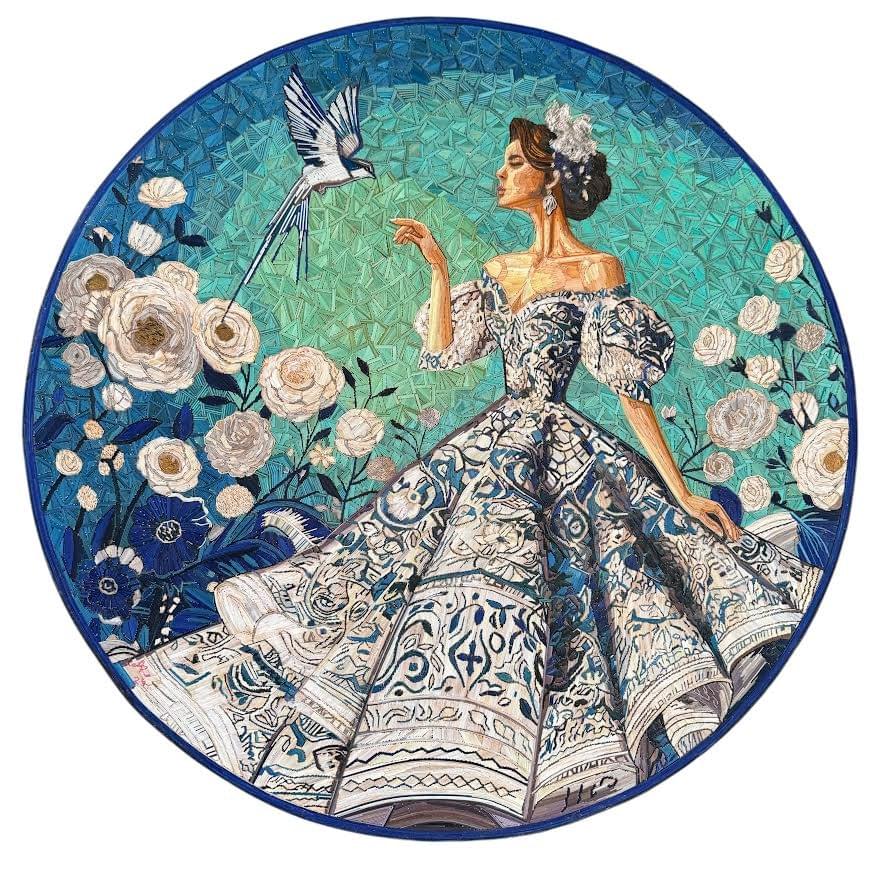
Some artistic traditions survive because they are protected from change. Others survive because artists find ways to carry them forward. For Joaquín Ariosto and Jesús Rivera, the artists behind Ariosto Rivera, preserving the ancestral Mexican technique of popotillo means honoring everything the tradition has carried through generations while allowing it to speak to the world in a new way.
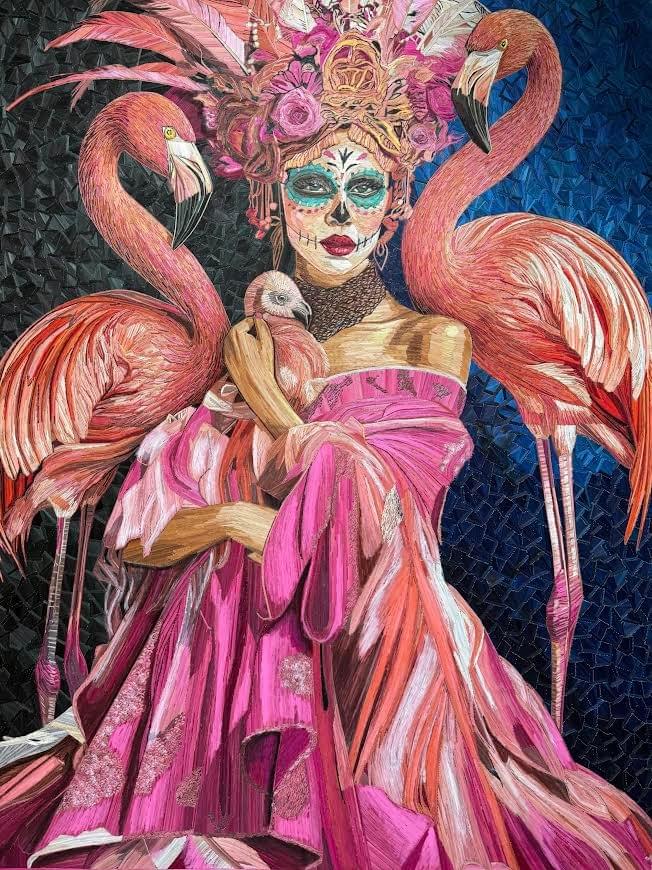
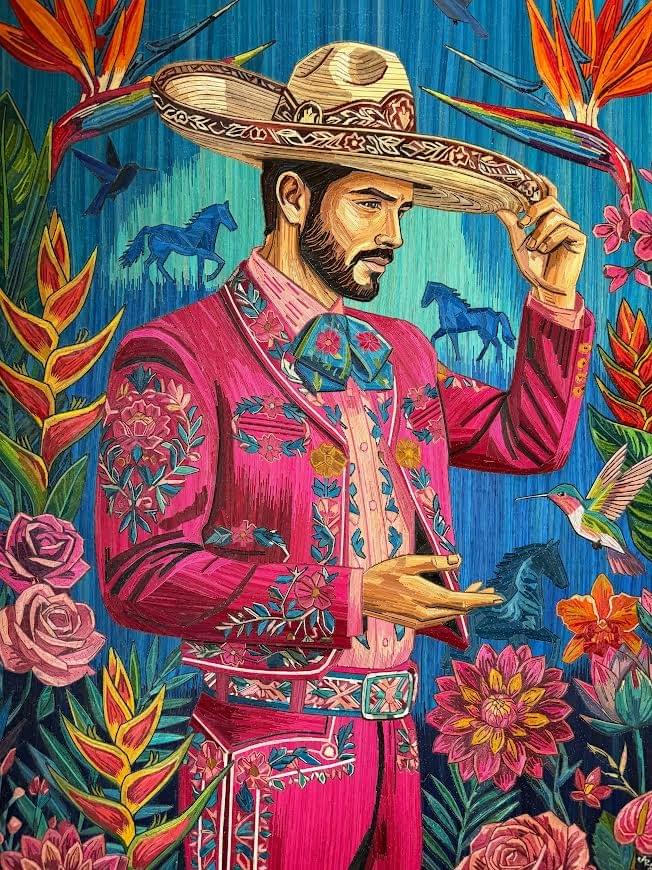
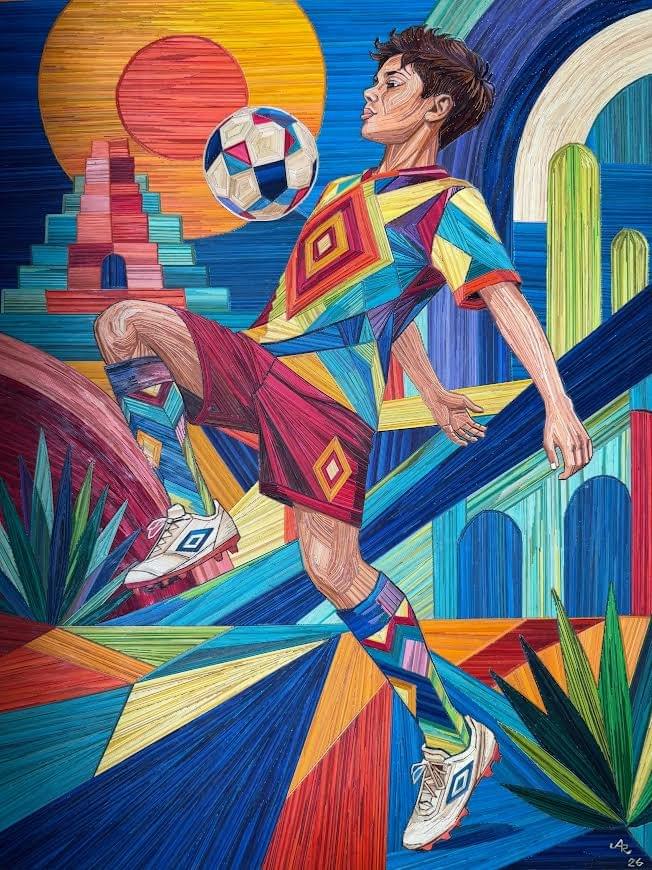
Based in Mexico City, Ariosto Rivera creates contemporary Mexican art using popotillo, a meticulous technique made from extremely thin natural straw fibers that are dyed with pigments and applied individually over beeswax. Associated with Mexico's pre-Hispanic cultural heritage, the process demands patience, precision, and an extraordinary respect for material. Every line, texture, and shift in color is built slowly by hand, one fiber at a time.
The partnership behind Ariosto Rivera began with two very different creative paths. Joaquín came from civil and structural engineering, bringing with him an interest in composition, balance, structure, and visual storytelling. Jesús had known popotillo since childhood, developing a lifelong relationship with the technique and refining it through years of discipline, practice, and sensitivity. When they began working together in 2016, those two paths became a shared artistic purpose.
At the center of that purpose was a concern that popotillo was slowly disappearing from public awareness. Rather than allowing the technique to remain overlooked or confined entirely to the past, Joaquín and Jesús began exploring how its visual language could enter contemporary art without losing the handmade process, cultural memory, or traditions that gave it meaning.
Their work is the result of that ongoing conversation between preservation and transformation. Highly detailed, richly textured, and filled with color, their figurative compositions move between Mexican heritage and dreamlike worlds. They do not attempt to modernize popotillo by erasing its history. Instead, they use the technique itself to demonstrate that tradition can evolve while remaining deeply connected to its roots.
Mexico is the foundation of their creative world. Its landscapes, popular art, spirituality, craftsmanship, traditions, colors, and everyday stories continually find their way into the work. A piece may begin with an emotion, a remembered image, or a cultural symbol, eventually developing into a composition that moves between reality and imagination, memory and transformation, inheritance and possibility.
Symbols carry particular importance throughout Ariosto Rivera's work. Butterflies appear as representations of metamorphosis and evolution, reflecting not only the transformations experienced throughout human life but also the artists' own journey and the continued evolution of popotillo itself. Hummingbirds carry associations with memory, love, spirituality, and the presence of those who remain connected to us beyond physical absence, while birds more broadly represent movement, freedom, and the possibility of rising beyond limitation.
Deer, including the blue deer, bring another layer of meaning to their visual language through associations with nature, mysticism, guidance, and ancestral wisdom. Catrinas, skulls, flowers, traditional garments, masks, animals, and symbolic figures populate their compositions as carriers of history and emotion. These elements are never included simply to make the work recognizable as Mexican. They become part of a larger visual vocabulary through which the artists explore identity, childhood, spirituality, life, death, and the constantly evolving relationship between the real and the imagined.
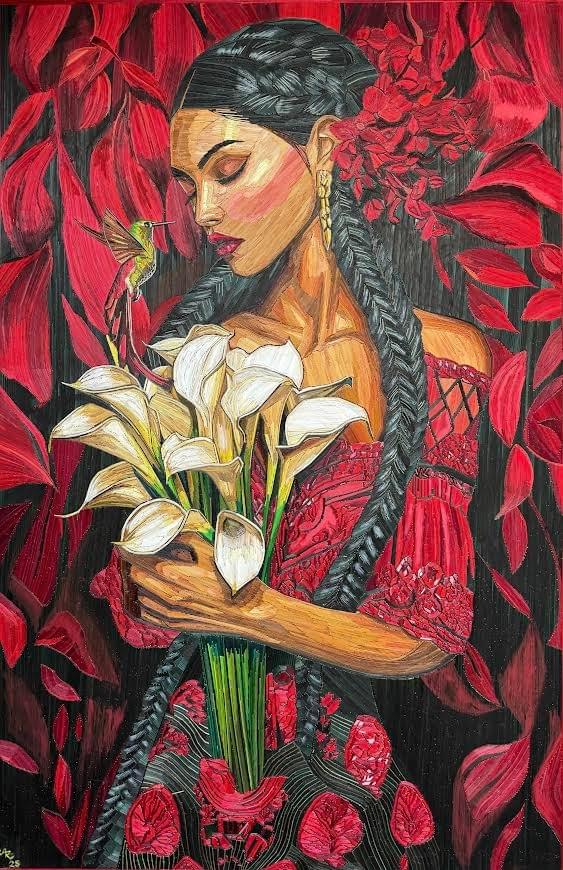
Among the works that hold particular significance for the artists is Patria Viva. Filled with color and symbolism, the piece brings together the strength and beauty of the Mexican woman, calla lilies, the flight of a hummingbird, and the colors of their homeland. Its surrounding red carries meanings of blood, passion, resistance, love, and devotion. More than a tribute to Mexico, the work becomes an expression of identity and cultural pride—a declaration of what is inherited, defended, remembered, and carried forward.
Behind every finished piece are countless hours of work that remain largely invisible to the viewer. Each individual fiber must be handled and placed by hand. Nothing about the process can be rushed. Patience, repetition, discipline, and concentration become part of the artwork itself. For Joaquín and Jesús, recognizing that labor is essential to understanding the value of handmade Mexican art and the people whose knowledge has kept traditional techniques alive.
That belief extends beyond their own artistic practice. Ariosto Rivera challenges the distinction that is often made between traditional craftsmanship and contemporary fine art. Their work asks viewers to reconsider how culturally rooted techniques are valued, who determines where craft ends and art begins, and what can happen when artists are given the freedom to carry inherited knowledge into new creative territory.
Through Ariosto Rivera, Joaquín Ariosto and Jesús Rivera are not simply preserving popotillo as a technique from the past. They are demonstrating its continued ability to tell stories, express emotion, and create meaningful connections in the present. Their work reminds us that cultural traditions remain alive when people continue to practice them, value them, and give them space to evolve.
One fiber at a time, Ariosto Rivera carries Mexican memory forward—honoring the hands that came before them while creating new possibilities for those who will encounter the tradition next.
Follow Ariosto Rivera and explore more of their work on Instagram: