

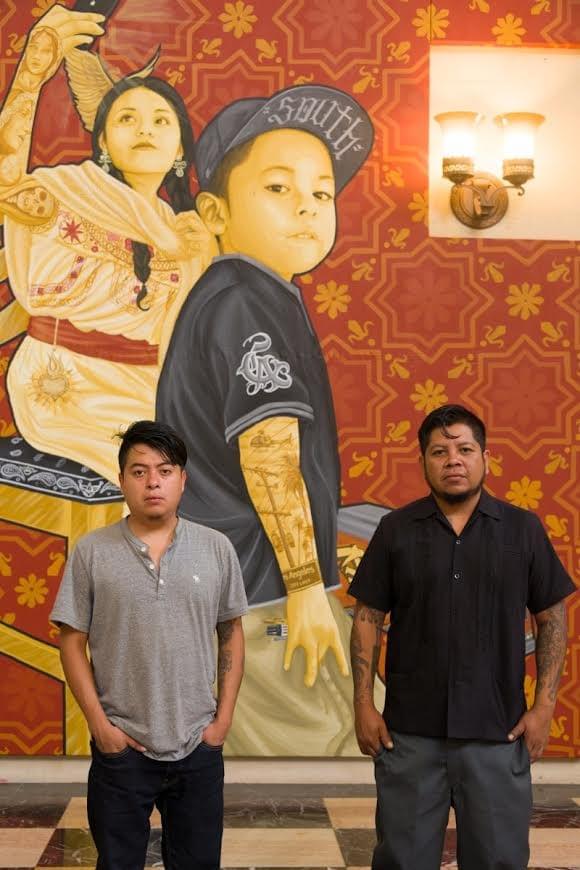
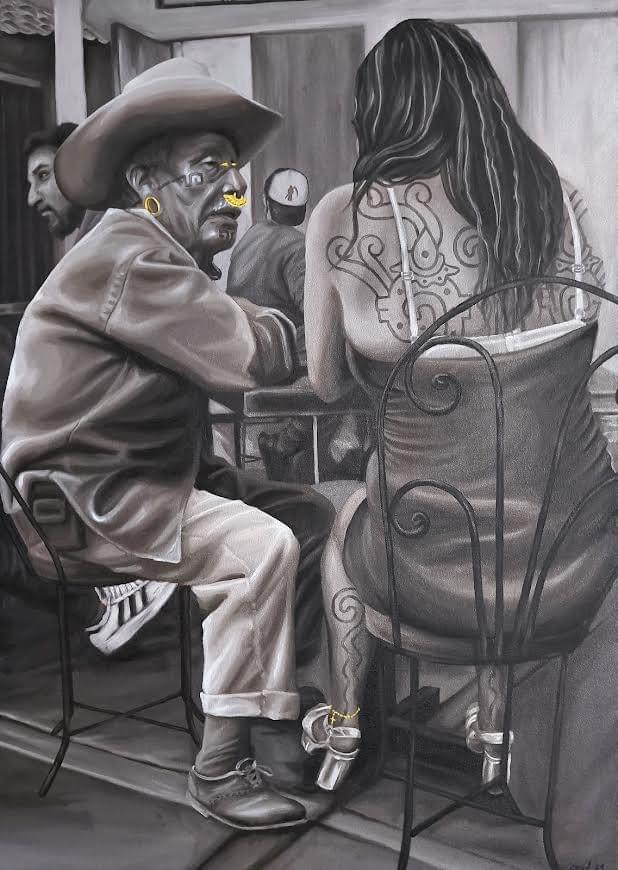
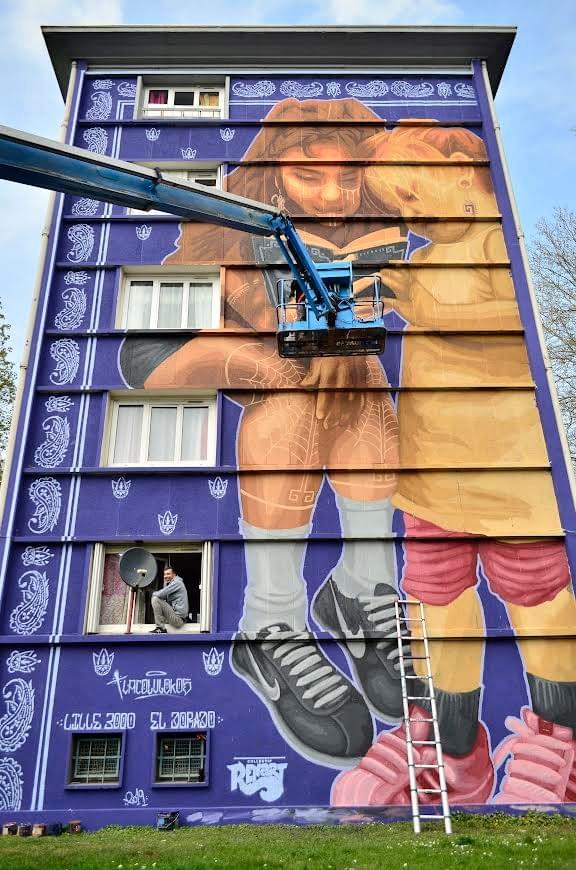
The work of Tlacolulokos doesn’t ask for passive viewing. It confronts you directly. Massive figures stare back with quiet intensity while layers of symbolism, typography, religious references, street culture, and Indigenous identity collide across walls and canvases. There’s weight behind the imagery, but also tension. Nostalgia sits next to discomfort. Pride exists alongside loss.
Based in Mexico, the collective has built a visual language rooted in social and cultural reflection, particularly around the realities facing Indigenous communities and their relationship with modern urban life. Their work pushes against romanticized or folkloric portrayals, choosing instead to focus on contradiction, migration, displacement, survival, and the ways ancestral identity continues to evolve inside contemporary society.
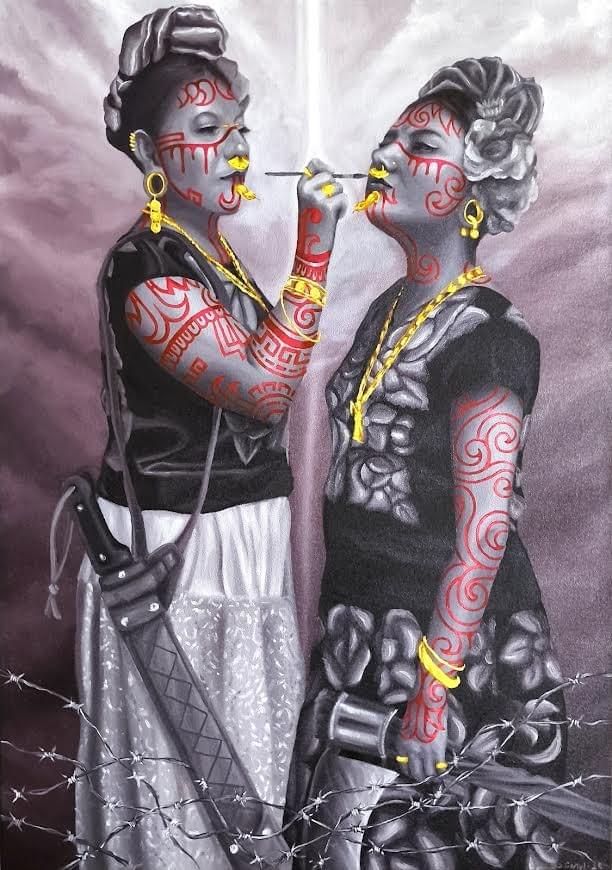
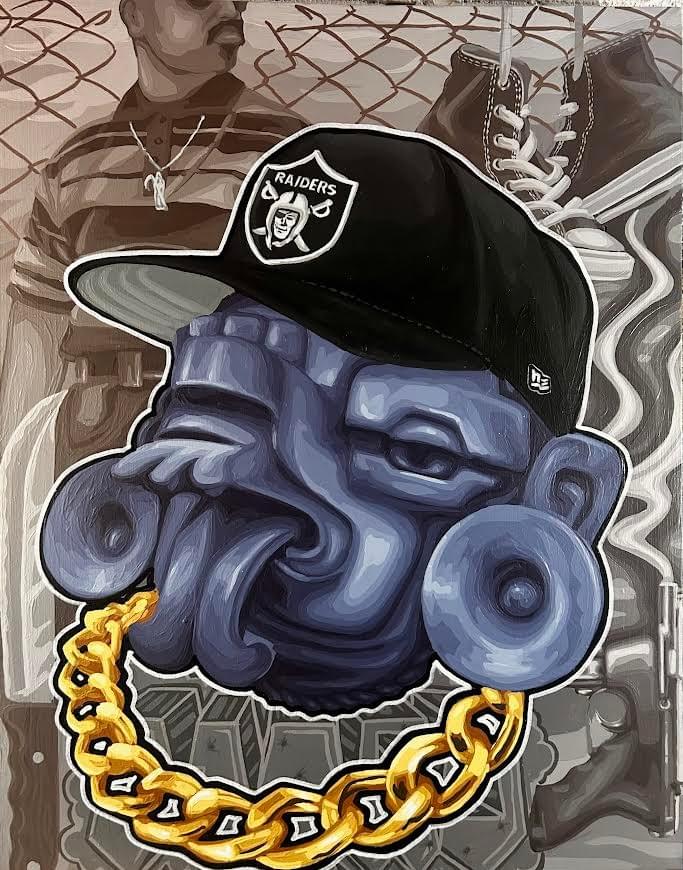
Color plays a deliberate role in that tension. Early on, Tlacolulokos stripped much of the color from their work, embracing a black and grey palette inspired partly by Chicano tattoo culture and partly as a response to the saturated traditional aesthetics often associated with Oaxaca. That decision allowed the emotional weight of the imagery to come forward more directly—grief, nostalgia, sadness, resilience. Over time, warmer sacred tones, ochres, and dramatic contrasts entered the work, creating a visual push and pull between colonial religious influence, Indigenous memory, and the coldness of modernity.
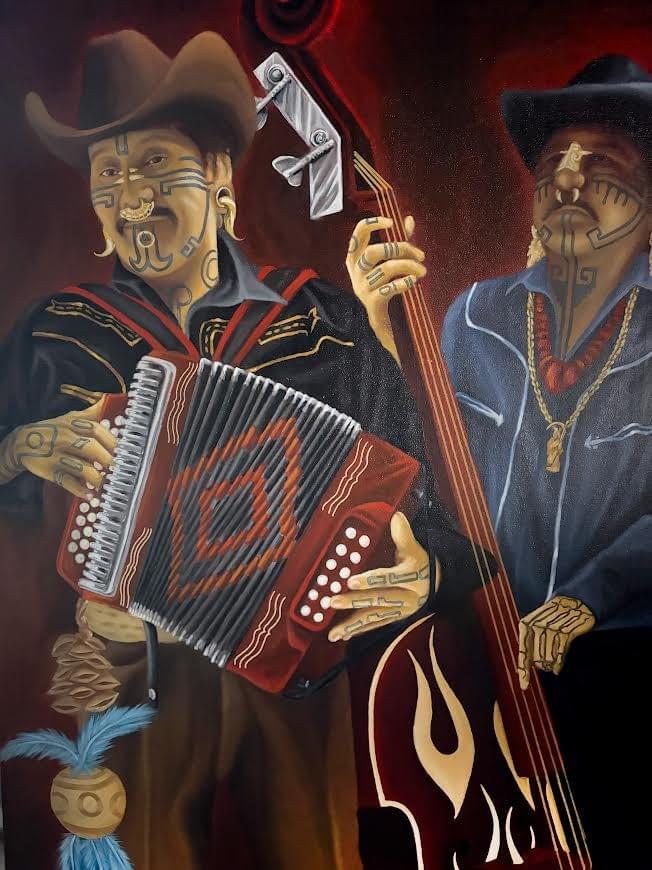
Their influences stretch across multiple worlds. The monumental mural compositions of Jorge González Camarena remain foundational, particularly his ability to create chaotic but emotionally charged scenes filled with imposing figures and movement. At the same time, Chicano art, Black and Grey tattoo culture, classical painting, colonial architecture, typography, and geometric floor patterns found in old churches all become part of the visual conversation inside their work.
What makes Tlacolulokos stand out is their refusal to simplify identity into something comfortable. Their pieces challenge viewers to think critically about history, migration, institutionalized culture, and the realities hidden underneath national pride. The work constantly asks difficult questions about who gets represented, who gets erased, and how memory survives inside everyday urban life.
There’s also an atmosphere running through the work that feels deeply reflective. Not nostalgic in a sentimental way, but in a more complicated sense—like looking at fragments of collective memory that still carry unresolved tension. Their murals and compositions create spaces where history, resistance, and present day survival all exist at once.
Follow Tlacolulokos and explore more of their work on Instagram:
Explore Latino Pop Art | Featured Aritst | Submit | About